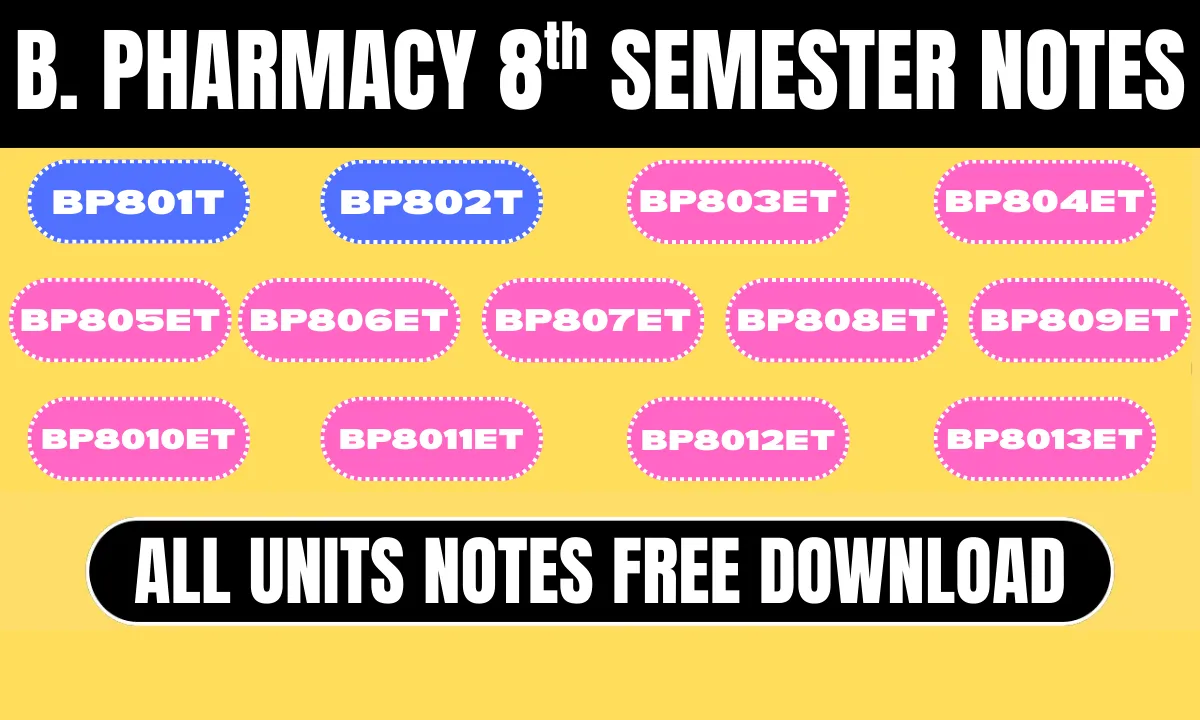
B. Pharmacy 8th Semester Imperfect Pharmacy Handwritten Notes
SOCIAL AND PREVENTIVE PHARMACY
What It Is:
SPP is a field of pharmacy focused on improving the health of entire communities. Unlike traditional pharmacy, it goes beyond medication dispensing and addresses larger health concerns.
What It Does:
Promotes healthy habits: Encourages behaviors that prevent disease (e.g., exercise, good nutrition, vaccinations).
Prevents outbreaks: Identifies risk factors and creates strategies to stop the spread of diseases.
Understands health policy: Analyzes laws and policies that impact the healthcare system.
Studies disease patterns: Uses epidemiology to understand why diseases occur and how to control them.
Works with communities: Collaborates with groups to improve access to care and reduce health inequalities.
BIOSTATICS AND RESEARCH METHDOLOGY
What it is:
The use of statistics to understand health-related data (diseases, treatments, trends, etc.).
What it does:
Turns raw data into meaningful health insights.
Tools used:
Summarizing data (averages, graphs)
Testing hypotheses about health patterns
Understanding probability in health outcomes
Specialized software for analysis
RESEARCH METHODOLOGY
What it is:
The step-by-step plan for conducting scientific research in a valid way.
What it does:
Ensures your study design, data collection, and analysis are sound to produce trustworthy results.
Key parts:
Defining the problem you’ll study
Reviewing existing research
Choosing the study type (e.g., experiment, survey)
Deciding how you’ll get data
Planning your data analysis
Protecting research participants
HOW THEY CONNECT:
Biostatistics is a powerful tool within research methodology. It helps researchers:
Design studies effectively
Collect data properly
Analyze data with the right statistical methods
Understand the meaning of their results
PHARMA MARKETING MANAGMENT
What It Is:
This specialized marketing field promotes pharmaceutical products to healthcare professionals (doctors, pharmacists). It must work within strict regulations and prioritize the complex decision-making process of healthcare providers.
Key Activities:
Market research (understanding the healthcare landscape)
Product positioning (creating a unique value message)
Promotional strategies (using medical reps, conferences, etc.)
Building relationships with healthcare leaders
Ensuring compliance with regulations
Managing sales teams
Goals:
Educate healthcare professionals about medications
Influence prescribing choices
Strengthen brand reputation
Increase sales and market share
PHARMACEUTICAL REGULATORY SCIENCE
Pharmaceutical Regulatory Science – Short Introduction
Pharmaceutical Regulatory Science is a specialized subject that deals with the laws, guidelines, and scientific principles involved in ensuring the quality, safety, and efficacy of pharmaceutical products. It focuses on the regulatory processes required for the development, approval, manufacturing, and post-marketing surveillance of drugs. In the B.Pharm 8th semester, this subject provides students with essential knowledge of regulatory compliance and prepares them for careers in the pharmaceutical industry and regulatory affairs.
PHARMACOVIGILENCE
Pharmacovigilance is the science and activities related to the detection, assessment, understanding, and prevention of adverse drug reactions (ADRs) and other drug-related problems. It plays a vital role in ensuring the safety of medicines after they are approved and marketed. In the B.Pharm 8th semester, pharmacovigilance provides students with knowledge about ADR reporting systems, post-marketing surveillance, and risk management, which are essential for patient safety and regulatory compliance in the pharmaceutical industry.
QUALITY CONTROL & STANDARDIZATION OF HERBALS
Quality Control and Standardization of Herbals deals with the methods and parameters used to ensure the identity, purity, safety, and consistency of herbal drugs and herbal formulations. This subject focuses on the evaluation of raw materials, processing techniques, and finished herbal products using pharmacognostical, physicochemical, and analytical methods. It helps in maintaining uniform therapeutic efficacy and global acceptance of herbal medicines.
COMPUTER AIDED DRUG DESIGN
Computer Aided Drug Design (CADD) is an advanced approach that uses computer-based tools and software to design, analyze, and optimize new drug molecules. It helps in understanding drug–receptor interactions, predicting biological activity, and reducing time and cost in drug discovery. In the B.Pharm curriculum, CADD provides students with essential knowledge of modern drug development techniques used in the pharmaceutical industry.
📚 More Resources from Imperfect Pharmacy
Explore high-quality pharmacy study materials, previous year papers, AKTU resources, and exam preparation content on Imperfect Pharmacy Notes.
